Spruth Magers London // 23rd September – 23rd December 2022
Avatar II physically harnesses the pre-prescribed connotations of the sterile and mono-chromatic environments in which contemporary art finds itself beguiled in today. If it were possible for an artist to lure an archetypal space into a false sense of comradery only to use this new found knowledge of its weaknesses against it, Imhof has done it here. A predicted demise, signed, sealed and delivered with a fist from the artist who was awarded the Golden Lion for Best National Participation at the Venice Biennale back in 2017. Faust strongly imposed upon the architecture of the German Pavilion. Shatterproof glass panelling encased the pillars and created a raised platform for visitors to view performances which would span hours. Twelve-foot high welded wire fences wrapped and restricted the view of the neo-classical building. People waited impatiently to get into this place. Faust depicted the the power dynamics of the now. Our political, dystopian realities. The objectification of physical bodies were materialised within the performance’s of people who navigated this space with visceral and vapid movements. These people and their intrusive performances became palatable…
Alas, we are here now, at Spruth Magers, accosted with a similar stone-cold, yet lurid orientation of objects and art. We find ourselves in a space that has had to modify itself, akin to some sort of meticulous cell mutation. Imhof has injected all four floors of the gallery space with her signature sense of foreboding. It’s palpable before you even enter the building.
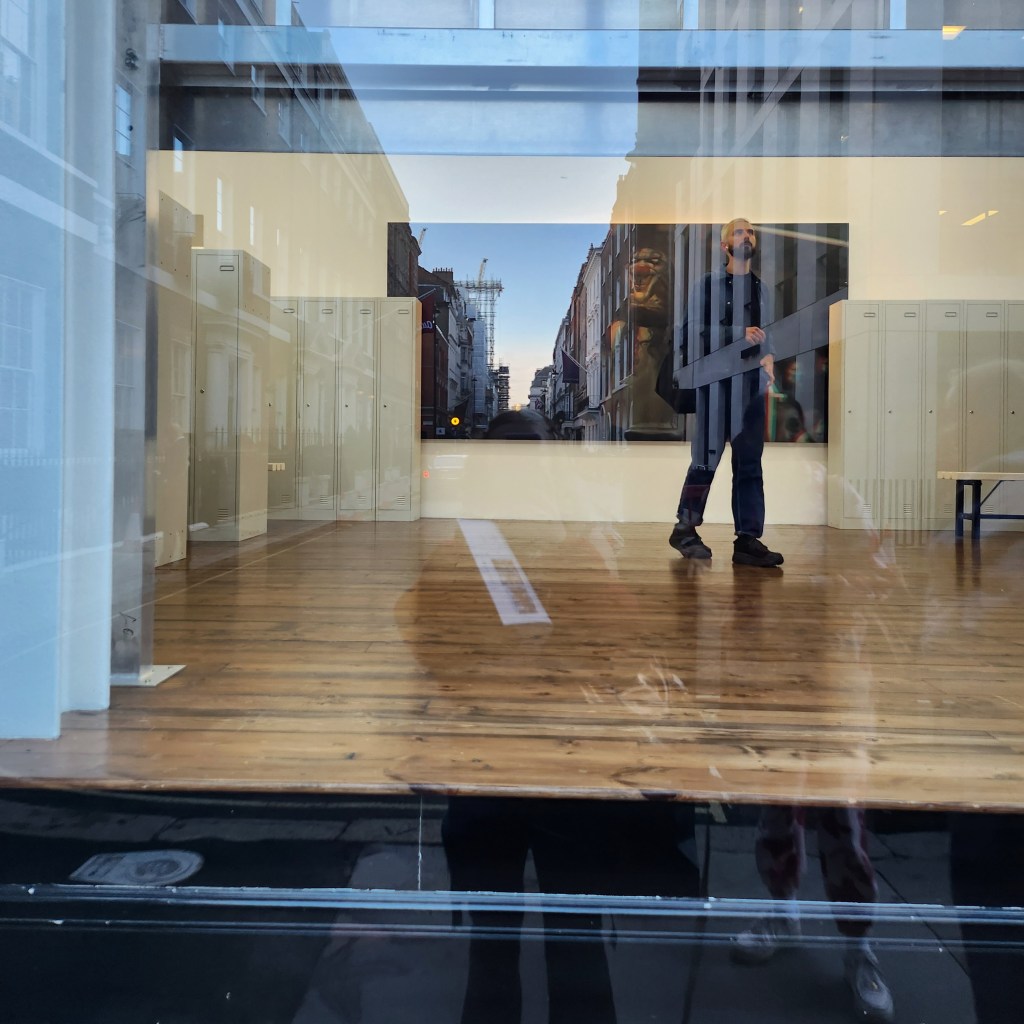
Upon entering the space, the mental uneasiness of Avatar II is not immediately overwhelming, since Imhofs work unravels insidiously. Tall, slim grey lockers set the tone by dividing the room. They overlap the first large-scale artwork on display. Jester depicts Imhofs muse, Eliza Douglas in an image captured from a performance at the Natures Mortes exhibition in 2021. Ominous and figurative, the oil painting shifts red and cyan at a skewed focal point. The contrasting colours superimposed on one another in this way resemble an anaglyph; a pair of images designed to create a three-dimensional effect, but here it remains in distortion.
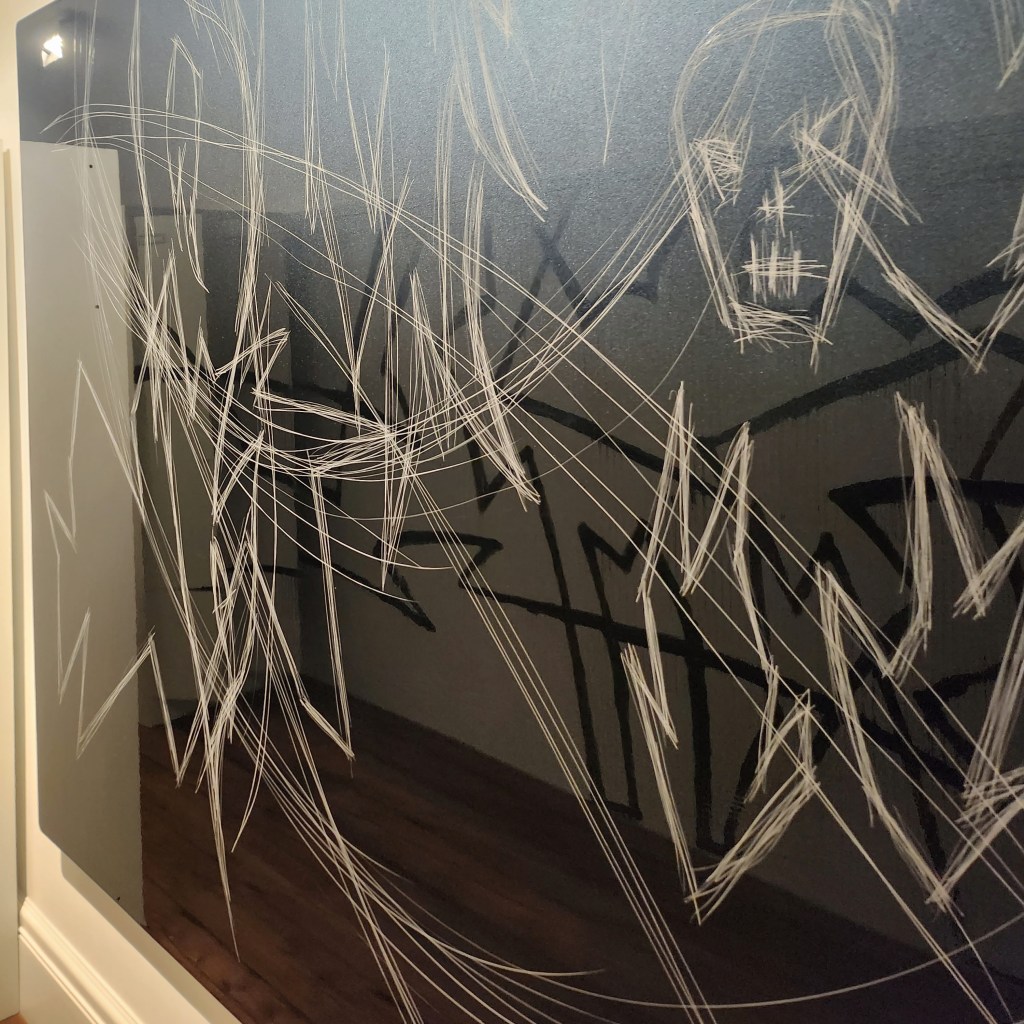
Another definition for anaglyph fittingly describes more work in Imhof’s show, ornaments carved in low relief. Avatar || proliferates with scratched aluminium panels. The Pacific, Monster and Current series appear to hover slightly off the walls in varying scales, resembling huge, high definition TV screens on stand by. From a material perspective, the panels look like luxury cars rendered flat and formless. The auto-motive paint finish is perfectly lacquered and it’s intensely satisfying to see the subtle gradients mixing with metallic particles. It’s equally satisfying to see the artful violence of this exhibition, Imhofs’ notion of scaring them indefinitely. These objects of desire have been vandalised, their insinuated functionality stripped. Imhof often explores the way in which signs or signifiers are read. These scratch works serve her ongoing narrative; abject beauty. The ambivalence of decoding the cipher and deciphering the code is present, yet unregulated her at Spruth Magers.

As you are led through narrow archways, the lockers are positioned in such a way that obstruct your movements, this is where the claustrophobic atmosphere begins to set in. You find yourself trying to make yourself as flat as possible in this locker labyrinth; for they have established their own space in the gallery. You are simply moving through it. You’re teleported into a space that constrains and confines you within the festering tension and charged entropy that buzzes around when you enter a locker room. Only to feel a resonating eeriness ringing in your ears, a force to be reckoned with becomes silent and dormant here.
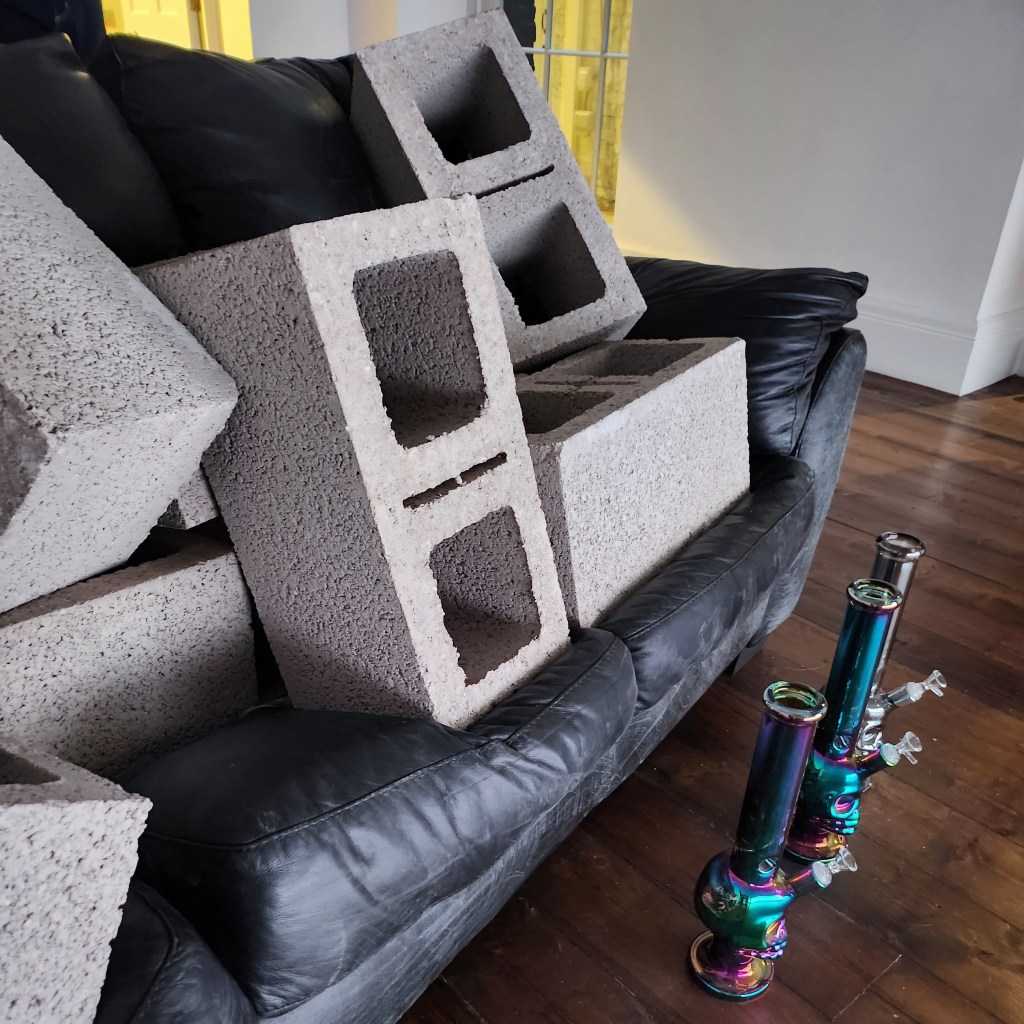
The locker as an object signifies an encouraged secrecy or self preservation. But the notion of submitting things that you deem valuable to a cold, inanimate object suggests a meek surrender of personal autonomy. You trust this lifeless object, with things that represent your life. Lockers objectify information and to some extent make this information desirable to others, a consumable commodity. Most of the metal cabinets are closed. I daren’t open them. While others that tempt your curiosity lay agar, concealing stacks of breezeblocks. These building blocks for brutalism invoke a sense of belonging, and we are met with them again in the basement. But this time they take up a space that you were meant for. The tatty leather loveseat bears the weight of the blundering breezeblocks and so you watch Avatar, standing. The 30 minute video is arguably the climatic point of the exhibition. The Spruth Magers Mekka until December 23rd. Eliza Douglas crouches on a gym bench with her arms up in menacing suspension. Accompanied by a set of lockers we have already been acquainted with. Snow falls silently over her bare chest as deep throbbing drones pulse out of the array of speakers behind us. She slaps herself in the face aggressively yet she remains emotionless. The next scene of the film cuts to an intense folly; the glottal stop of Eliza Douglas methodically licking her shoulder is unnerving and jarring.
The journey up the winding stair wells of this 1960’s building offers some sort of respite before you are met with what the next room presents. I’ll note that the site recently underwent large-scale renovation after one of Germany’s leading contemporary art galleries fell into disrepair. The problem was, according to the contractors who fixed it, (Advanced Preservations Ltd) that ‘The building has many earth-retaining, soft masonry arches, which meant the structure was particularly prone to water ingress and deterioration.’ Everything we’ve seen so far points to a convoluted sense of low morality. Economic stagnation, intellectual exhaustion and an abstract decline toward moral decay. I detect the stench of social decadence, a recurring theme in Imhof’s work. For a start we are in Mayfair. We are forced to look at a minimalism only money can buy as we make our way backward through Imhofs sinister anti-reality. The voiceless motifs of a melancholic, materialistic youth are repeated at every turn in the space. Two forces are constantly repelling each other. We stand, piggy in the middle as they battle it out for visual and physical dominance. Imhof’s experimental use of object and artwork, confuses the spectator to a point of understanding, or perhaps just acceptance.
Suicidal Tendencies, another anaglyph, hangs above a fireplace. Interrupted by a graffiti-like mural with no spatial awareness – it cuts into and over the mantelpiece and dado rail with angst. In the same room, unaccompanied and stripped bare of what makes this item useful is a heavy duty weight stand. These hunks of galvanised blue steel anthropomorphize a certain strength that one has to train hard for. A struggle that can only be realised through pain and determination of the mind, body and soul. The machine forms a sort of three dimensional H shape with circular perforations throughout its structure. Handles jut out towards you, and unidentifiable lips and ledges appear phallic. The Power Rack looks abnormally large in this space; Its protuberance contrasts the soft arches and detailing of the coving which it almost unwelcomingly touches. Being beside it, you feel small and weak, as if there is an overtly masculine presence that is commanding the room. Asking you to leave. Telling you to leave. And so you do.
 CONNIE HOPE
Leave a comment